


 JudgeNapolitano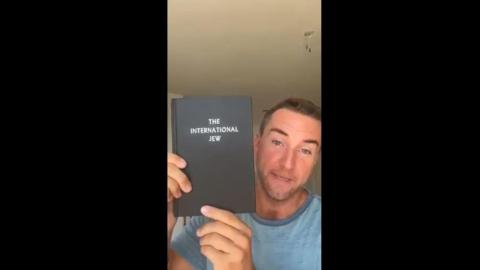
 Life_N_Times_of_Shane_T_Hanson

 Stefan Molyneux
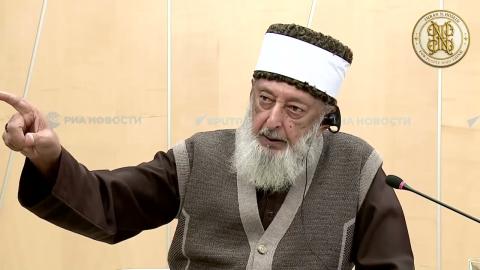
 Sheikh Imran Hosein
 Free Agent Lifestyle
 Taylor The Fiend
 Darius M
 Gonzo Og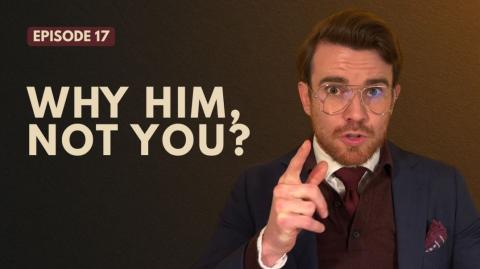
 NerokeFive


 Bro Hajji
 Masculinism Movement
 Better Bachelor
 The Realist Philosopher
 TheQuartering

5 Ways Men & Women Communicate Differently | The Psychology Explained
This episode is about how men and women communicate — and why the same conversation can sometimes mean two completely different things.
Women are more people-focused, more empathising, more agreeable, more sensitive to emotional cues, and more willing to disclose negative information. Men are more things-focused, more systemising, less agreeable on average, and more likely to keep negative experiences to themselves.
Men and women speak the same language. Yet differences in personality, interests, emotional perception, and disclosure can mean we enter the same conversation noticing different information and expecting different things.
I discuss people versus things, empathising versus systemising, agreeableness, emotional subtext, negative disclosure, alexithymia, autism, and practical ways men can communicate more effectively with women.
Women read between the lines. Men may need it said out loud.
– CHAPTERS –
00:00 Same Words, Different Messages
00:53 Why I Made This Episode — My Apology
01:55 Men Focus on Things — Women Focus on People
05:38 Women Empathise More — Men Systemise More
08:37 Women Prioritise Harmony — Men Tolerate More Friction
11:34 Women Read the Subtext — Men Need It Said Out Loud
14:29 Women Talk About the Negative — Men Keep It In
17:16 Alexithymia, Men & Autism
18:28 Final Thoughts
You can also support me and the channel through my clothing brand, ADVIKATE™. It is embedded with the values of Freedom, Adventure, Solidarity, and Truth — values that are deeply important to me and that I hope to convey through this podcast as well.
Use code EXISTENTIALEVAN for 20% off.
Disclosure: ADVIKATE™ is my own brand.
Disclaimer: This video is commentary and personal opinion. It is not financial, legal, psychological, medical, or relationship advice.
Support: If you are in crisis, contact your local crisis line or emergency services. In Australia, call Lifeline on 13 11 14. Outside Australia, find a local helpline through Befrienders Worldwide. If life is in immediate danger, call your local emergency number.
#ExistentialEvan #MenAndWomen #Communication
– REFERENCES –
People, Things & Interests:
Du, Y. Y. L., Wee, S., & Rounds, J. (2025). Gender differences in vocational interests across 57 countries: A test of the interest–gender-equality paradox. Social Psychological and Personality Science, 16(1), 27–44. https://doi.org/10.1177/19485506241280321
Empathising & Systemising:
Greenberg, D. M., Warrier, V., Allison, C., & Baron-Cohen, S. (2018). Testing the empathizing–systemizing theory of sex differences and the extreme male brain theory of autism in half a million people. Proceedings of the National Academy of Sciences of the United States of America, 115(48), 12152–12157. https://doi.org/10.1073/pnas.1811032115
Romero, A., Blanch, A., & Chopik, W. J. (2026). Male and female empathy across 24 countries and 60 latitudinal degrees. Personality and Individual Differences, 251, Article 113596. https://doi.org/10.1016/j.paid.2025.113596
Personality & Agreeableness:
Rammstedt, B., Roth, M., Roemer, L., & Lechner, C. M. (2026). Revisiting gender differences in personality: New evidence on Big Five domains and facets with large-scale samples from 27 nations. Personality and Individual Differences, 257, Article 113806. https://doi.org/10.1016/j.paid.2026.113806
Emotional Cues & Subtext:
Hall, J. A., Gunnery, S. D., & Schlegel, K. (2025). Gender and accuracy in decoding affect cues: A meta-analysis. Journal of Intelligence, 13(3), Article 38. https://doi.org/10.3390/jintelligence13030038
Disclosure & Negative Information:
Carbone, E., Loewenstein, G., Scopelliti, I., & Vosgerau, J. (2024). He said, she said: Gender differences in the disclosure of positive and negative information. Journal of Experimental Social Psychology, 110, Article 104525. https://doi.org/10.1016/j.jesp.2023.104525
Alexithymia & Autism:
Mendia, J., Zumeta, L. N., Cusi, O., Pascual, A., Alonso-Arbiol, I., Díaz, V., & Páez, D. (2024). Gender differences in alexithymia: Insights from an updated meta-analysis. Personality and Individual Differences, 227, Article 112710. https://doi.org/10.1016/j.paid.2024.112710
Kinnaird, E., Stewart, C., & Tchanturia, K. (2019). Investigating alexithymia in autism: A systematic review and meta-analysis. European Psychiatry, 55, 80–89. https://doi.org/10.1016/j.eurpsy.2018.09.004
– CONNECT –
ADVIKATE™ | Shop: https://advikate.au
Subscribe: https://youtube.com/@Existenti....alEvan?sub_confirmat
Instagram: https://www.instagram.com/existentialevan/
TikTok: https://www.tiktok.com/@existentialevan
Facebook: https://www.facebook.com/existentialevan/
– CONTACT –
Business Enquiries:
enquiries@advikate.au

0

Log in to comment